A great resource for learning about upstate stakeholders and stewards living in the watershed is "Views from the Watershed," a podcast by Lize Mogel. Link.
The Present, Part II
For generations, New York City residents have been able to access their water supply without a sense of the back story. There were (and still are) mounting hardships and sacrifices that residents in the watershed face, while massive public works projects spanning over a century have allowed city residents and visitors access to this healthy, clean resource. Even with the financial assistance the city provides, watershed communities are often unseen stewards who hold the responsibility of protecting the city’s water supply. Like any public system, New York City’s drinking water needs support from all of its more than eight million users. Learning from the rich and intricate complexity that is New York City’s public drinking water system and treating public space like a commons with stakeholders, stewards, and allies is integral for it to thrive and be a more just system.
A great resource for learning about upstate stakeholders and stewards living in the watershed is “Views from the Watershed,” a podcast by Lize Mogel. Link.
A great overview of NYC’s water with insights on today’s maintenance and stewardship.
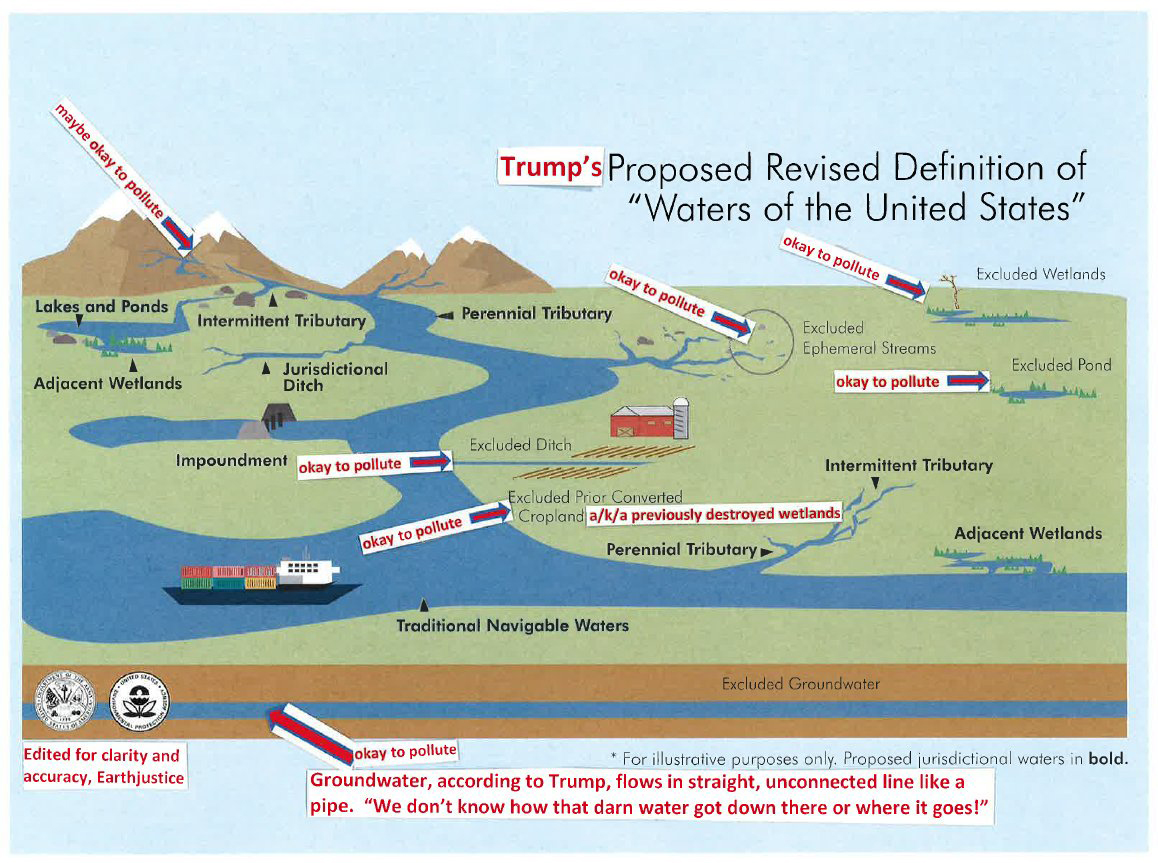
Dirty Water Rule graphic by Earthjustice staff, from the article "What the Trump Administration Is Doing to Your Water" dated April 2020
The Present, Part I
The Trump administration had pushed for economic growth no matter the human and ecological cost. In the early summer of 2020, then EPA Administrator Andrew Wheeler announced that they were following through on President Trump’s executive order to curb “abuses of the Clean Water Act that have held our nation’s energy infrastructure projects hostage, and put in place clear guidelines that finally give these projects a path forward’’ (New York Times). Jon Devine, director of federal water policy at the Natural Resources Defense Council, replied that the Trump administration’s Clean Water Act rollbacks guts states’ and tribes’ authority to safeguard their waters.The consequences of industrialization’s material aspects are present in human-caused environmental catastrophes, from epic extinctions to rapid erosion, exploited soils, contaminated water, and debased forests leading to desertification, climate change, and habitat collapse. Trump’s executive order against the Clean Water Act adds to the long list of environmental damage done for the sake of capital accumulation.
Contrary to the national agenda, New York City is working to protect the harbor through green infrastructure initiatives that combat stormwater runoff and combined sewer overflow (CSO), both of which carry pollutants into local waterways. New York City has implemented green infrastructure throughout Brooklyn, Queens, the Bronx, and some parts of Manhattan with the goal of reducing CSO by 1.67 billion gallons per year by 2030. In addition to green infrastructure, the DEP also has a long term plan for protecting our local wetlands and Jamaica Bay.
Dirty Water Rule graphic by Earthjustice staff, from the article “What the Trump Administration Is Doing to Your Water” dated April 2020. Link.
Rolling back the Clean Water Act
The Clean Water Act, dating all the way back to 1972, today establishes a strict regulatory structure for controlling pollutants in streams, lakes, and the wetlands of the United States. Early in 2020, the U.S. Army Corps of Engineers and Trump’s Environmental Protection Agency (EPA) released the Navigable Waters Protection Rule, which detailed how the CWA will be enforced, including which waters receive federal protections under the act, effectively leaving US waters vulnerable to pollution. This was commonly dubbed the “Dirty Water Rule” by environmental groups because, according to the NRDC, “it harmfully—and illegally—narrowed the scope of the Clean Water Act by revoking federal protections for countless important streams, wetlands, and other waters. In particular, the Dirty Water Rule excluded millions of miles of rain-dependent streams and millions of acres of wetlands from critical safeguards of the Clean Water Act.” Source, NRDC.
In June 2021, the Biden Administration announced that it would take steps to repeal the “Dirty Water Rule,” and in August 2021, a federal judge in Arizona tossed out Trump’s illegal rule in response to a lawsuit against the EPA brought on by six federally recognized Indian tribes represented by Earthjustice.
— To learn the full history of the Clean Water Act, read the article by Earthjustice, “What the Trump Administration Is Doing to Your Water.”
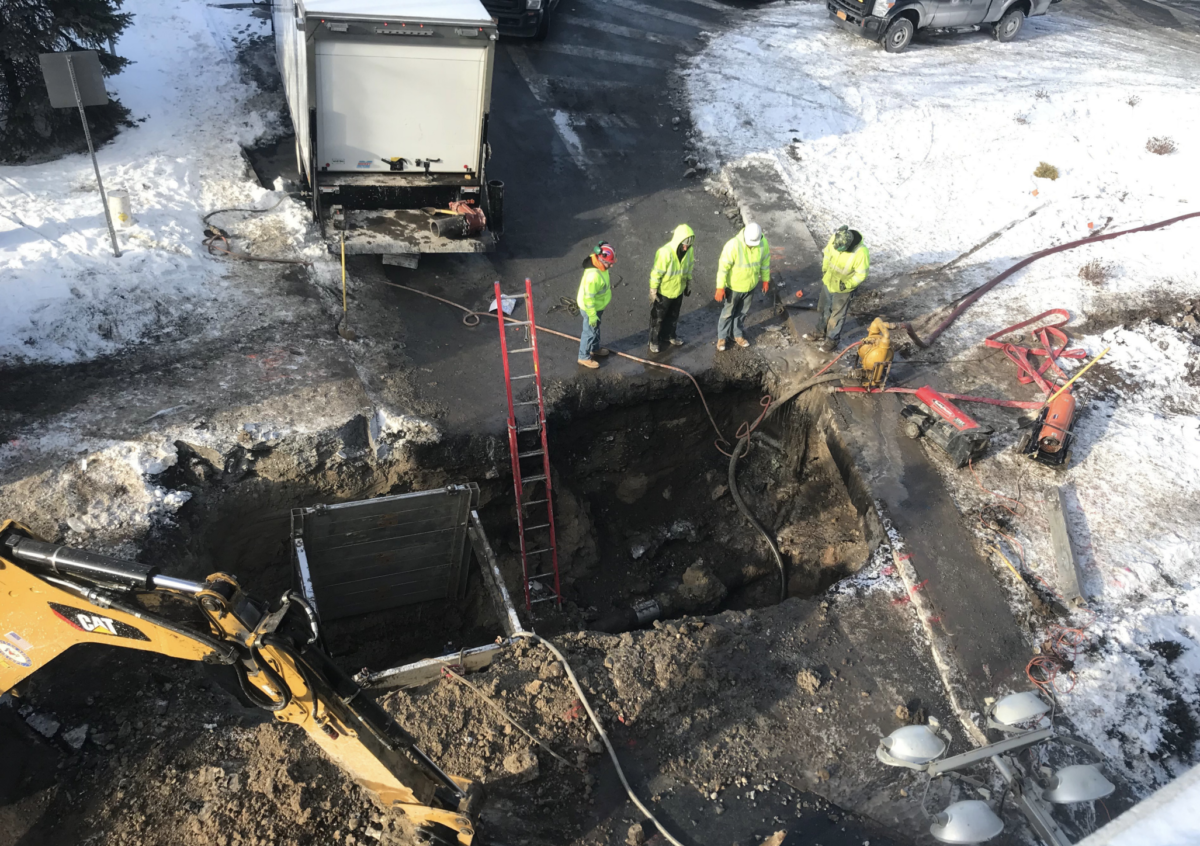
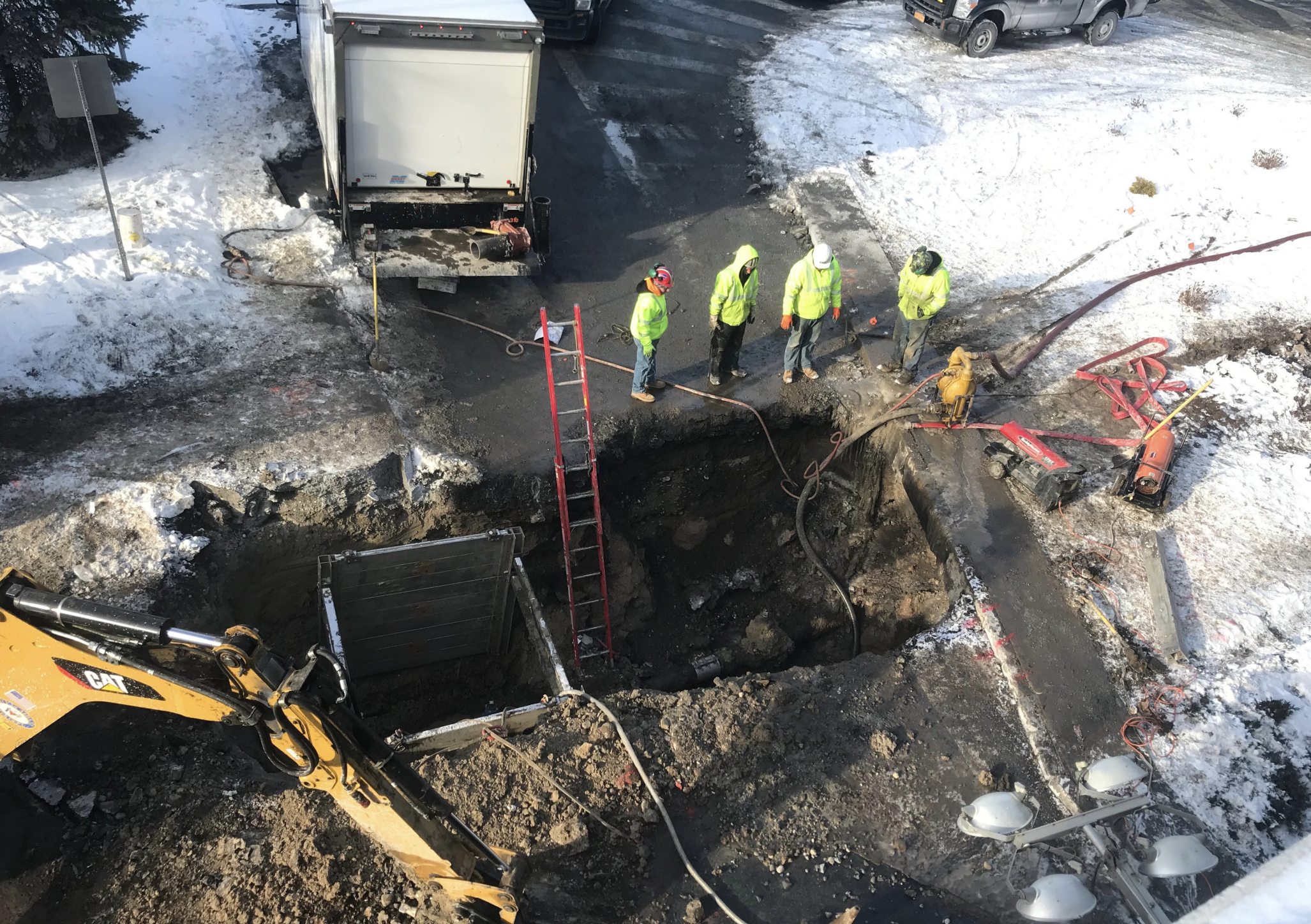
Water main break near the Empire State Plaza in Albany, NY. Photo credit: EANY. Link.
Filtration, Part II
Given the size of the city, the New York City drinking water supply system has grown to be the largest unfiltered water supply in the United States and the largest surface water system in the world. Every day, it provides 1.2 billion gallons of high quality drinking water to nearly half of the population of New York State. Today, however, parts of New York City’s drinking water infrastructure are over 100 years old. The failure to maintain this basic service has created a massive backlog of repairs and upgrades. Governor Cuomo’s proposed $400 million five year annual budget for water projects barely put a dent in what is needed. Across New York State, urgency is mounting as water main breaks flood neighborhoods, sewage overflows discharge untreated waste into waterways, failing septic systems pollute land and waterways, and pipes leach lead. However, the Food and Water Watch states, “A 2009 study by the Clean Water Council estimated that every $1 billion spent on water infrastructure could create between 20,000 and 27,000 jobs across the economy. Governor Cuomo and the legislature could promote safe water and clean energy by creating jobs laying water pipelines instead of fossil fuel pipelines.”
Water main break near the Empire State Plaza in Albany, NY. Photo credit: EANY. Link.
In 2020-2021 Governor Cuomo’s budget proposal included $500 million in new funding for water infrastructure projects. The Environmental Advocates of New York released the following statement, “We applaud the continued investment of $500 million in clean water funding. However, $500 million isn’t nearly enough to clearthe backlog of shovel-ready water infrastructure projects across New York. The need in New York State is $80 billion to fix our pipes. At a time when our drinking water systems face increased costs from aging infrastructure and new threats from emerging contaminants like PFAS chemicals, we need to do better in order to protect our water for future generations.”
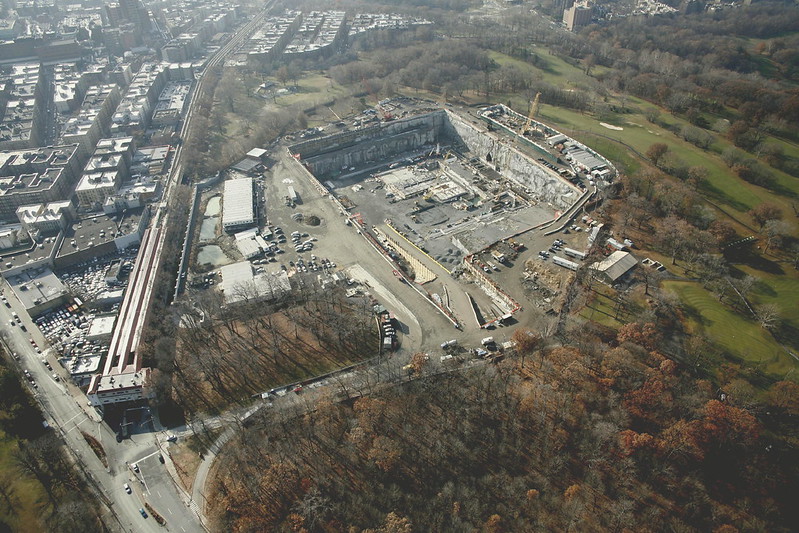
The Croton Water Filtration Plant under construction in 2007. The plant was completed in 2015. The 9-acre, 4-story-deep site is located under the Mosholu Golf Course in Van Cortlandt Park in the Bronx. Photo by DEP via Flickr.
Filtration, Part I
Alongside Boston, San Francisco, Seattle and Portland, Oregon, New York City is one of five cities in the United States with a largely unfiltered water supply. Ten percent of the city’s water supply is currently filtered by a UV filtration plant that recently opened under Van Cortlandt Park in the Bronx. The plant treats water from the reservoirs surrounded by development in Westchester and Putnam counties. A team of scientists and engineers also work 24/7 alongside monitors to oversee the water quality throughout the watershed. The DEP must make sure the water is kept in pristine condition, which it does by fending off migratory birds from the reservoirs, fixing homeowner’s septic tanks, working with farmers to control manure runoff, and constantly trying to buy more land to prevent the area around the watershed from being paved and polluted.
The Croton Water Filtration Plant under construction in 2007. The plant was completed in 2015. The 9-acre, 4-story-deep site is located under the Mosholu Golf Course in Van Cortlandt Park in the Bronx. Photo by DEP via the DEP/NYC Water Flickr account. Link.
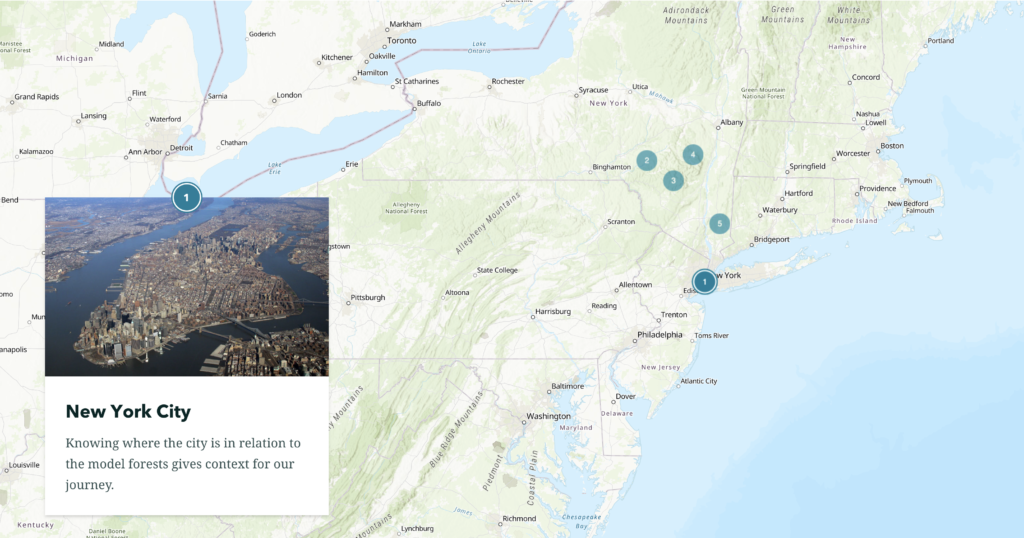
The Model Forest Program Interactive Map
The following interactive map narrates the story of partnership, education, and sustainability in the New York City watershed.
A screenshot of the interactive map as viewed on the Model Forest Program website.
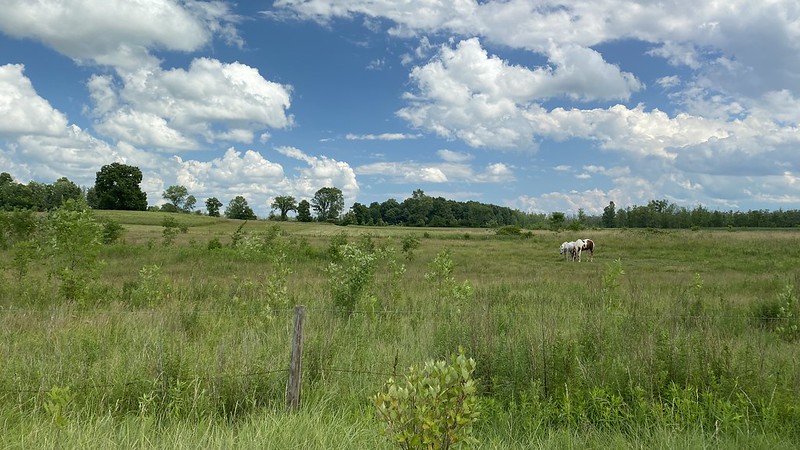
An Upstate NY farm landscape. Photo by Daniel Piraino via Flickr.
Power Sharing and Participation, Part II
City officials believed the success of this program was due to both parties setting their particular goals. Both a clean drinking water supply for the city and the economic viability of Catskill farming were important, and both sides had to agree to commit to achieving both goals. They also believed that its success had to do with asking farmers to design most of the program themselves (based on local knowledge and supplemented by their own experts). The proposed program they designed in 2010 was called “Whole Farm Planning.” It incorporated environmental planning into the business strategy of the farm. Also groundbreaking was the insistence that all agencies had to agree to put aside their particular concerns and instead identify the contributions they could make to the program, or they could not participate.
An Upstate NY farm landscape. Photo by Daniel Piraino via Flickr. Link.
The Watershed Agricultural Council
The Watershed Agricultural Council has developed a set of Best Management Practices (BMP’s) intended to take a holistic approach to farm management while reducing the pollution generated by agriculture. These practices are intended to be mutually beneficial for the farm businesses, as well as the number of cities that receive their water from this area. Risks are identified and addressed through structural planning to reduce agricultural runoff into farm streams. “The process begins when a farmer signs a voluntary participation agreement with WAC and agrees to develop a Whole Farm Plan in conjunction with a Planning and Implementation team. As a part of the Whole Farm Plan, Best Management Practices (BMPs) are selected and implemented by using a multiple barrier approach starting with the source and moving to crop fields and the stream corridor.” To read all of the potential pollutants categorized and prioritized, click here.
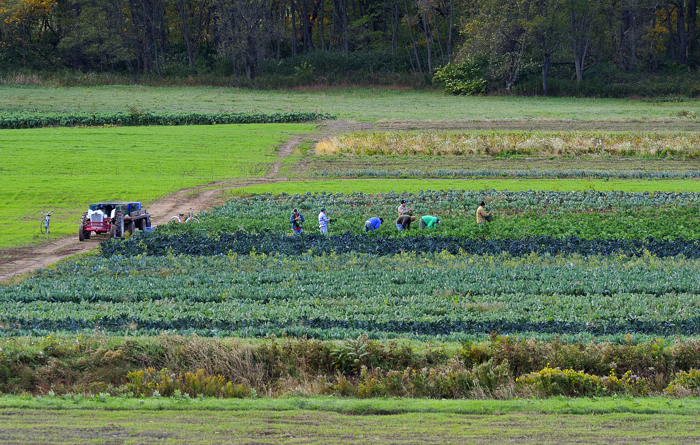
Workers on a Hudson Valley farm. Photo by Diana Robinson via Flickr.
Power Sharing and Participation, Part I
As industrial agriculture was taking hold in much of rural United States in the early 2000s, programs were implemented between local and city governments along with residents to find mutually-beneficial ways of protecting both the watershed and the communities within. An eighteen month process worthy of a saga between farming communities in the Catskills and New York City officials led to an agreement: farmers would be financially compensated for voluntary ecological improvements that prevented animal and chemical waste from entering the water system. Additionally, the city would bear the cost of replacing or fixing residents’ septic tanks when needed, and forestry management practices would be put in place to ensure regeneration of critical forest land.
Workers on a Hudson Valley farm. Photo by Diana Robinson via Flickr. Link.
From ‘Grey’ to ‘Green’ Infrastructure
Farmers have become “watershed guardians” keeping water clean while producing fresh produce for New York City. “By the 20th century, the sources were no longer so pristine. Upstream Catskill farmers began industrializing their farm operations. Nutrient use increased, dairy herds concentrated, erosion accelerated, and this led to pathogens showing up in New York City’s water supply… in the end an innovative and far-reaching agreement was crafted. With the city’s support, the Catskill farmers formed the Watershed Agricultural Council and created a program called ‘Whole Farm Planning.’ Rather than a one size fits all approach mandating specific practices, unique pollution control and forest management plans were developed for each participating farm, with technical support from experts of agencies such as the Department of Agriculture and Department of Forestry.”
To learn more about how farmers are working directly, please read the full article here.
Local Farming Impact
The Watershed Agricultural Council, is working directly with farmers to finance drainage solutions, manure pads, barnyard construction and other projects that farmers themselves might not be able to afford. Improvements like this are imperative to keeping the watersheds clean and properly maintained. There are currently 368 farms that have fully agreed to Whole Farm Management plans that account for a total of 163,500 acres of farmland.
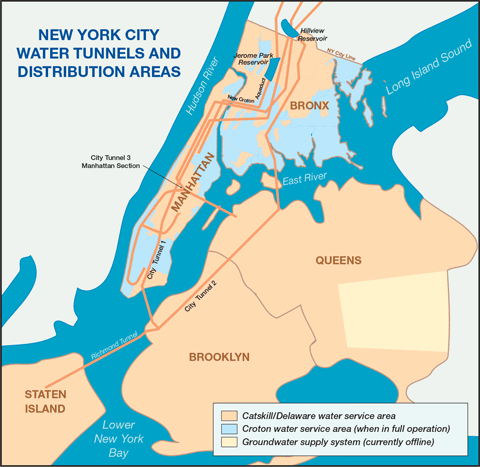
Groundwater supply system map showing how each system services parts of NYC. Source: NYC DEP. Link.
The Water System Updates
In 2008, 98.3% of New York City’s water came from the Catskill/Delaware system. The Croton system provided 1.7% of the daily supply to the City. New York City’s groundwater system in southeastern Queens was off-line for the entire 2008 calendar year. Today, 75% of the 2,000 square mile public and private watershed is covered by forests, and dislocation by eminent domain is no longer a concern. The system is now seen as one of the greatest modern successes in ecosystem services management in the United States and is modeled around the world. Although bitterness and animosity still linger, thoughtful partnerships with more balanced power dynamics have begun to change those relationships toward one of careful cooperation.
Water supply system map showing how each system services parts of NYC. Source: NYC DEP. Link.
The New York City Drinking Water Supply & Quality Report
The Commissioner of the New York City Environmental Protection Services publishes a yearly supply and quality report sharing findings of year-long studies conducted on the quality of New York City’s drinking water. To read more about how the study was conducted or the action the government is taking to preserve important water channels, the full report can be found here.
In May, 2020, the Delaware Aqueduct Bypass Tunnel, a significant milestone in a project to repair the longest tunnel in the world. “Each steel segment is 16 feet in diameter, 40 feet long, and weighs about 106,000 pounds. The $1B repair project was completed in August 2020, ensuring that the aqueduct continues to deliver water from the Catskills to New York City after more than a century in service.
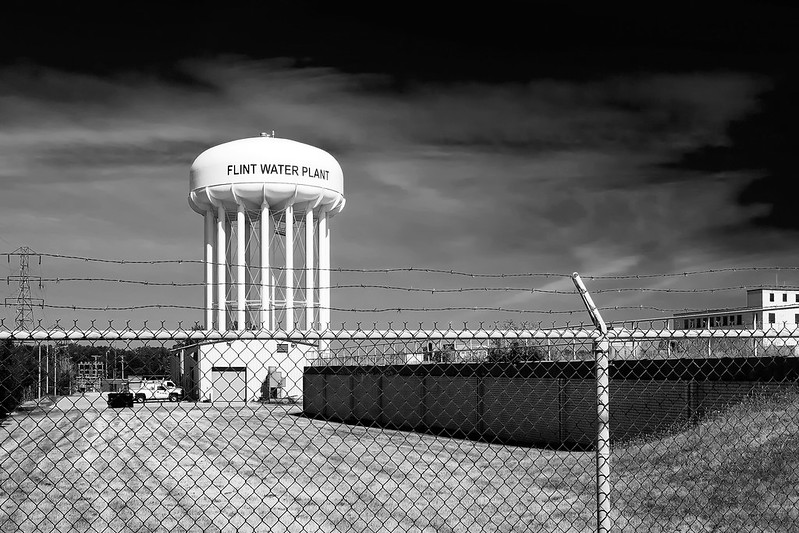
Flint water plant, Michigan, 2016. Photo by George Thomas via Flickr.
Mismanaged Water Infrastructure Privatization
More recent effects of mismanaged privatization occurred across the country, where immediate solutions have involved bottled water, which has an estimated $350 billion dollar global industry by next year. In the past several years, cities including Newark and Detroit have advised residents to drink bottled water due to old pipes that leeched lead and copper into the tap water. Communities outside town limits across the U.S. are not connected to municipal water supplies, and they too often turn to bottled water as their well water is contaminated. In places such as Fairmead, CA, communities lack tap water because it has been used up by other sources, including agriculture and big cities. In Flint, MI, the city changed Flint’s water supply to the polluted and cheaper Flint River in order to save the city money. Instead of investing in long-term solutions, at times governments have relied on bottled water companies for quick fixes to pollution problems.
Flint water plant, Michigan, 2016. Photo by George Thomas via Flickr. Link.
On Water Privatization
Food & Water Watch, a non-profit focused on addressing the most pressing issues of food, water, and climate issues, dives into the complexities of water privatization in the following article. The organization recognizes there is a possibility of a successful partnership between the public and private sectors, however sole responsibility to provide clean drinking water should fall under the jurisdiction of the local government.
“Investor owned utilities typically charge 59 percent more for water service than local government utilities. Food & Water Watch compiled the water rates of the 500 largest community water systems in the country and found that private, for-profit companies charged households an average of $501 a year for 60,000 gallons of water- $185 more than what local governments charged for the same amount of water.”
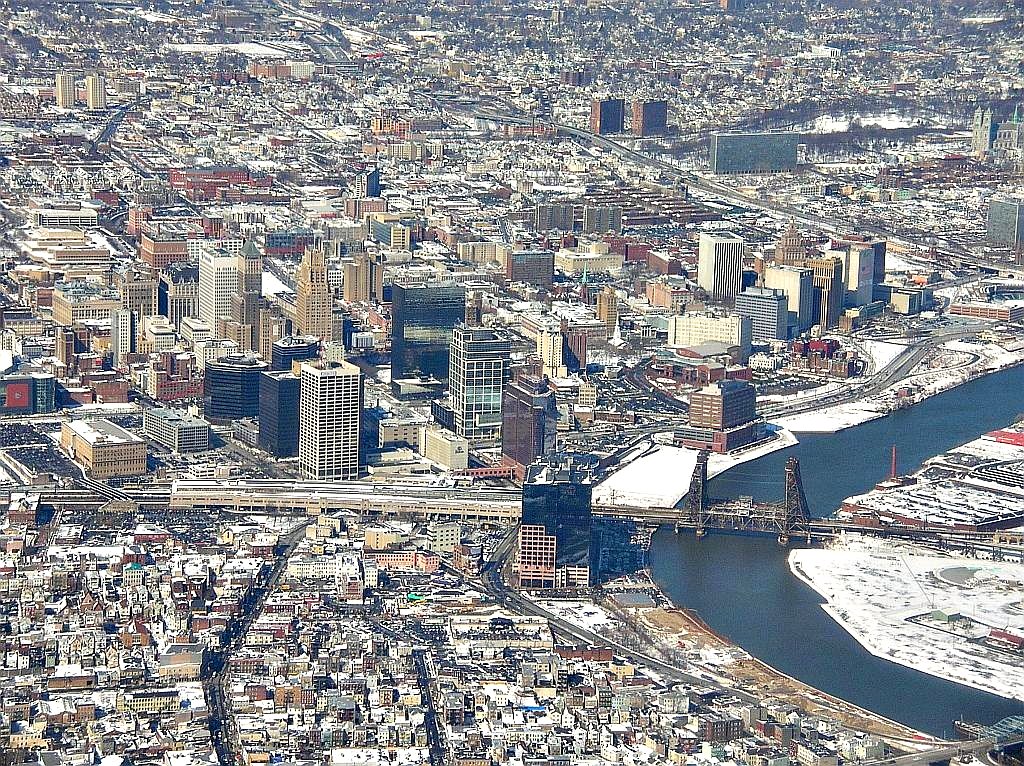
Newark, NJ. Photo by Stephen Rees, 2009, via Flickr. Link.
The Story of Newark, New Jersey: Lead-Poisoned Water
Similar to the issue in Flint, Michigan, both crises featured among the highest tap water lead levels of any large city, and both affected low-income, predominantly black communities. In 2017, the New Jersey Department of Environmental Protection first flagged Newark’s lead levels as exceeding the federal action level. However, the problem began long before then, when the city failed to take the necessary steps at the treatment plant to stop the corrosion of the lead piping. Due to the lack of action by local government officials, and the slow response time to distribute water filters, the city had already been drinking lead-laden tap water for at least 21 months. In some homes, the water levels would test higher than 26 or 64 times the federal action level. To learn more about the strong community voices taking action against the crisis, please read the full article by the NRDC (National Resources Defense Council), “Inside the Fight for Clean Water in Newark”.
The Story of Fairmead, California: The town that ran out of water
The town of Fairmead, California, an aging farming community, has actually run out of clean drinking water. Some of the community members have been out of running water dating as far back as seven years. The county is still working on a state-funded project to supply water, but in the meantime the town is left with dried wells leaving certain homes in the town without any running water to their homes.
According to an article published in the Fresno Bee in August 2021, “wells are going dry everywhere. Drillers have months-long waitlists. Residents are scrambling for water tanks. And farmers will soon face a reckoning after agriculture’s footprint, particularly nut trees, has more than doubled in the past 50 years–far outpacing irrigation supplies.”
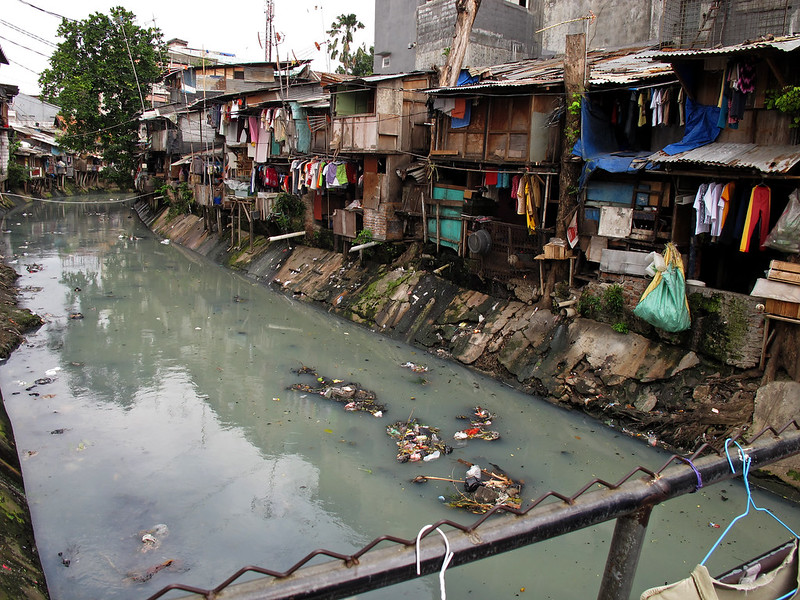
Polluted waterways in Jakarta, Indonesia, 2013. Pollution in these waterways not only contributes to a lack of clean water, but also make flooding more likely during the rainy season. Source: World Bank Photo Collection via Flickr.
International Water Infrastructure Privatization, Part II
Additional protests around water privatization began happening in Asia, Africa, and other parts of South America. The Kyoto Water Forum in 2003 saw various strands of the water justice movement coming together to reject the commodification of water. Despite these advances, The Wall Street Transcript organized a conference in 2005 titled, “Profiting in the Water Industry: Tapping a reservoir of wealth.” The conference reported that in the U.S. alone the water industry was expected to grow to $150 billion before inflation (the World Bank estimated the global market of water services to be worth $800 billion). The announcement promised participants opportunities to discover investments and profitable niches in the $150 billion water industry.
Polluted waterways in Jakarta, Indonesia, 2013. Pollution in these waterways make flooding more likely during the rainy season. Source: World Bank Photo Collection via Flickr. Link.
Financing infrastructure for the water sector comes mainly from the public sector of developing countries and is “topped-up” with contributions from foreign aid, international financial institutions, commercial loans and private equity. Despite the link between water security, development and poverty alleviation, overall investment in water resources management has been seriously neglected. According to the Vision and other estimates, developing and transitional countries will require $180 billion annually in order to produce global water security over the next 25 years. This will require greater efficiency and better financial management. Several models for combining public, donor and/or private (both international and local) funding have been attempted, and the results have been mixed. The debate concerning public-private partnerships has not been resolved.
In 2015, an Indonesian Supreme Court ruling ordered Jakarta to end one of the world’s largest water privatization schemes.
“A coalition of activists, trade unions and Jakarta residents filed a class-action lawsuit in 2012 claiming that the companies failed to guarantee people’s right to clean water. The companies both engaged in price differentiation that disproportionately taxed low-income residents and afforded them huge profits…
The defendants proved that the private companies’ “cooperation agreement has had a real and extraordinary impact on society,” the Supreme Court said in its decision. “These losses include: 1) Piped water services that can only be accessed by about half the population in Indonesia … and 2) Citizens must pay for clean water at very high rates but with poor water quality and quantity.”
It is consistent with an earlier 2004 Supreme Court ruling on water privatization, which posited that “water resources have to be controlled and allocated for the public benefit, thus private companies cannot monopolize rights over water sources.”
Water access threatens to become a major public health issue if it is not addressed promptly. North Jakarta residents described how they received “only sporadic water service, mostly limited to evening hours.” Others said they “were forced to buy expensive drinking water from street vendors and bathe in polluted public wells.”
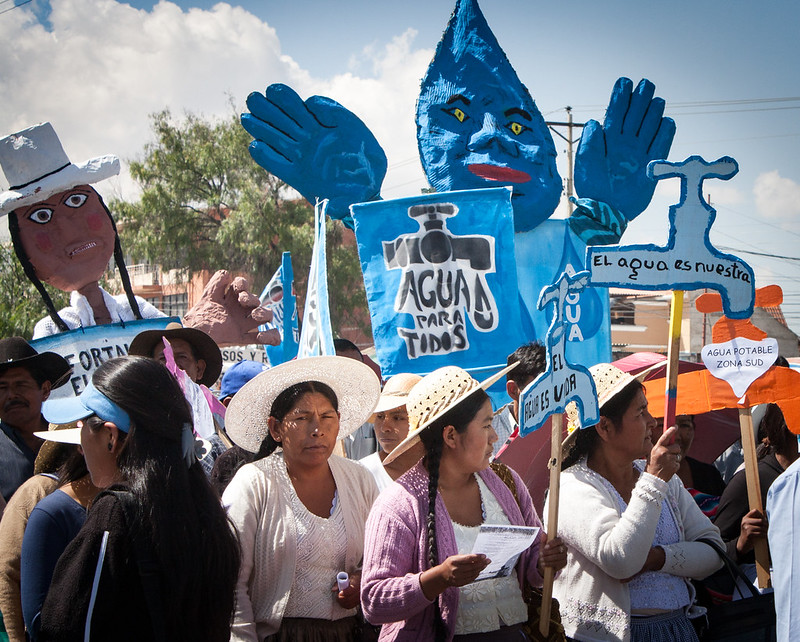
On April 15, 2010, thousands marched in the streets of Cochabamba to commemorate the 10 year anniversary of their successful fight to stop the privatization of their water by Bechtel Corporation in April, 2000. Source: Photo by Peg Hunter via Flickr.
International Water Infrastructure Privatization, Part I
In 1996, The World Bank offered a $14 million loan to Cochabamba, Bolivia to expand their water system, under the condition that they privatize their water company. The San Francisco corporate giant, Bechtel, took control of Cochabamba’s water, and city residents saw their water rates go up by an average of 50%. The people of Cochabamba and their rural neighbors protested for months, shutting down the city with strikes and blockades on three separate occasions. Bolivia’s president sent armed troops and suspended constitutional rights, but in April, 2000, Bechtel lost its foothold in Bolivia. Not much later, the markets for drinking water infrastructure became publicly traded with exchange traded funds, like the S&P Global Water Index Fund (CGW on the NYSE trading at $41.7) and AllianzGI Global Water Fund (another ETF), which traded on the NASDAQ under AW-TAX currently at $17.66 a share. Ultimately, the Bolivian water revolt has had tremendous impact around the world and inspired similar movements.
On April 15, 2010, thousands marched in the streets of Cochabamba to commemorate the 10 year anniversary of their successful fight to stop the privatization of their water by Bechtel Corporation in April, 2000. Source: Photo and caption by Peg Hunter via Flickr. Link.
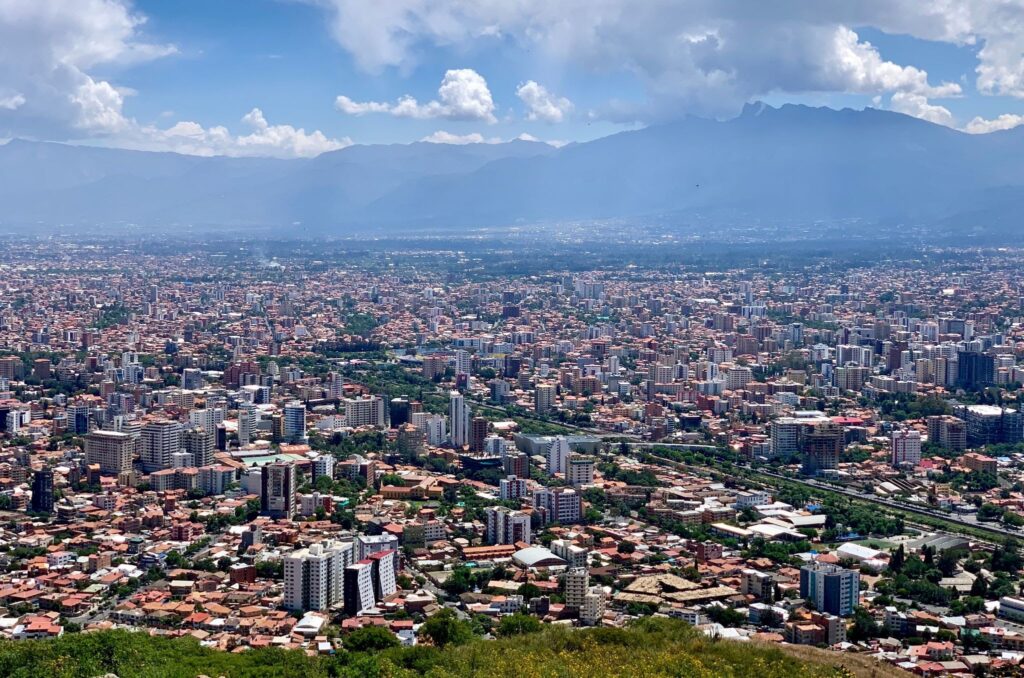
A view of Cochabamba, Bolivia. Source: Wikipedia. Link.
EJ Atlas Explanation on Cochabamba Water War
“In 1999 the US company Bechtel was granted the concession to manage water services in Cochabamba, Bolivia’s third largest city. The cost of water tripled and it became necessary to buy a license to access water resources and a licensing system for collecting rainwater was also introduced. After a year, 55 percent of local citizens still did not have access to water. In April 2000, hundreds of thousands marched on the streets of Cochabamba to protest against the Government, and forced it to revoke the Water Privatisation Law. The contract with the multinational company Bechtel was terminated and the water service concession re-advertised. The conflict, known as the Cochabamba Water War, became symbolic of the struggles fought to protect common rights, proving that popular participation could have a major influence on decision making in regard to the management of public services.”
Breakdown of the Cochabamba Water War provided by Environmental Justice Atlas here.
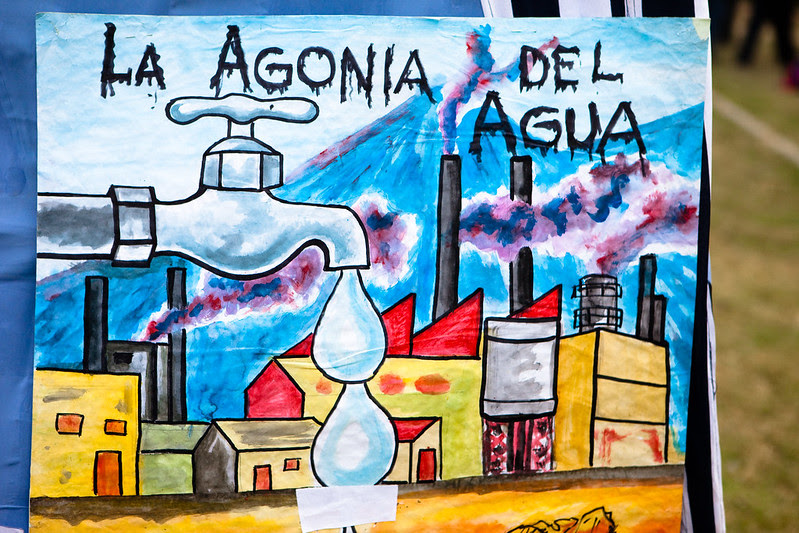
Feria Internacional del Aqua – 10 year anniversary of Cochabamba Water Wars, 2010 – Bolivia. Photo: Kris Krüg, via Flikr. Link.